If you look at the animal kingdom, humans usually sit at the top of the intelligence ladder. Below us, we place the Great Apes (like chimpanzees and orangutans), and maybe dolphins or elephants. Birds are usually placed much lower down.
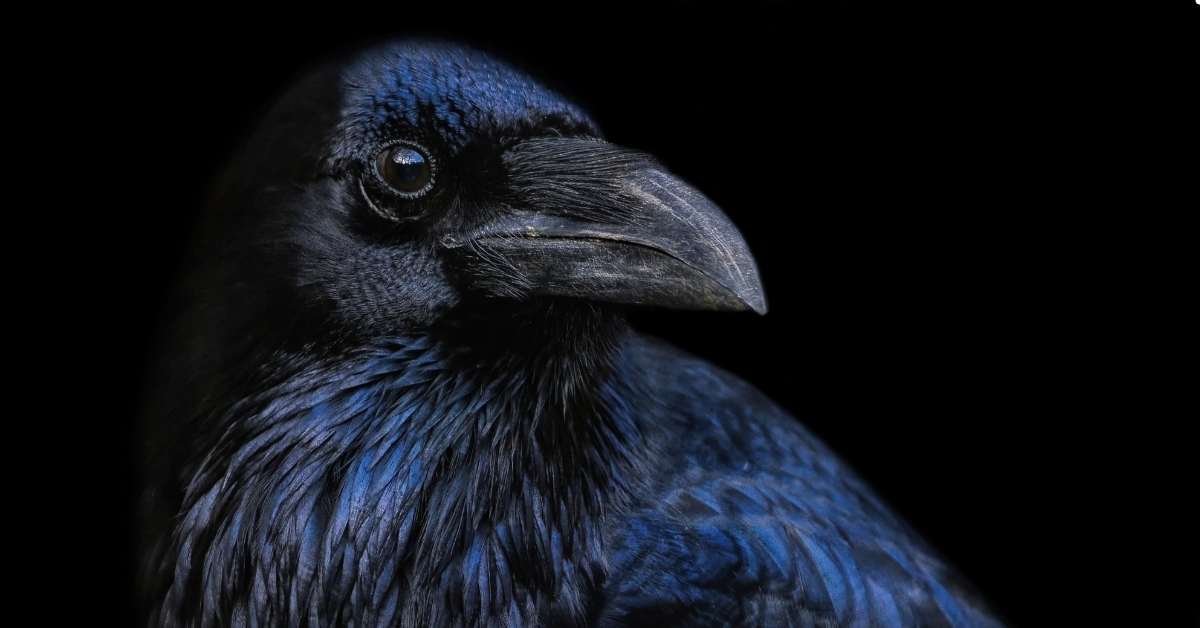
However, in the last twenty years, science has discovered something that has shaken up this ladder. There is a bird that rivals the intelligence of a primate. It doesn’t have a massive brain, and it doesn’t have hands. It is the common crow.
While you might know they are “smart,” you probably don’t realize just how smart. We aren’t talking about simple tricks like sitting or staying. We are talking about understanding physics, solving math problems, and having the ability to lie.
Here are the fascinating, scientifically proven reasons why crows are the world’s smartest birds—exploring facts that go far beyond the basics.
1. They Understand Physics (The “Aesop” Test)
There is an old Greek story called “Aesop’s Fables.” In one story, a thirsty crow finds a pitcher of water, but the water is too low for its beak to reach. The crow drops stones into the pitcher, one by one. The stones displace the water, making the level rise until the crow can drink.
For centuries, this was just a story. But recently, scientists decided to see if it was actually true.
They presented crows with a tube of water containing a floating worm. The worm was out of reach. They also gave the crows a pile of stones. Without any training, the crows realized they needed to change the water level. They picked up the stones and dropped them into the tube until the worm floated to the top.
But the test got harder. Scientists gave the crows heavy, solid objects and light, hollow objects that floated. If you drop a floating object into the water, the water level doesn’t rise much. The crows quickly realized this. They stopped using the floating objects and only selected the heavy, solid ones. This proves they understand the physical concept of “displacement”—something human children often don’t grasp until they are five to seven years old.
2. The Ability to Craft, Not Just Use
Using a stick to poke a bug is clever, but it is basic. Chimpanzees do it. Even some insects do it. Making a tool is a completely different level of genius.
The most famous example of this comes from a crow named Betty at Oxford University. In 2002, researchers gave Betty a challenge: a small basket of food trapped at the bottom of a tube. They gave her a straight piece of wire.
A straight wire could not lift the basket. Betty paused, looked at the problem, and did something incredible. She wedged one end of the wire into a crack in the table and used her beak to bend the other end. She created a perfect hook. She then used her custom-made tool to fish the basket out.
Betty had never seen this problem before. She had never been shown how to bend wire. She simulated the solution in her brain and then engineered the tool to match her thought. This is known as “causal reasoning,” and it is extremely rare in the animal world.
3. They Have “Theory of Mind” (They Can Lie)
“Theory of Mind” is a psychological term. It means the ability to understand that other beings have their own private thoughts and intentions.
If you are a dog, and you hide a bone, you assume it is safe. But crows are naturally suspicious because they are thieves themselves.
Biologists have observed a behavior called “fake caching.” If a crow finds a piece of food, it will want to bury it for later. But if it sees another crow watching, it knows that the other crow might steal it.
So, the first crow will pretend to bury the food. It will dig a hole, thrust its beak in, and cover it with a leaf—but it keeps the food tucked in its throat pouch. The “thief” crow thinks the food is buried there and flies down to dig it up, only to find an empty hole. Meanwhile, the first crow flies away to a secret spot to hide the real treasure.
This proves that the crow understands what the other crow is thinking (“He thinks I hid the food”) and uses that knowledge to deceive him.
4. The Marshmallow Test (Impulse Control)
One of the hardest things for an animal to do is to wait. If you are a wild animal, your instinct says, “Eat the food now, or you might starve.”
Psychologists use the “Marshmallow Test” on human children. You give a child one marshmallow and say, “If you wait 15 minutes without eating this, I will give you two marshmallows.” Most young children fail; they eat the first one immediately.
Crows have passed a version of this test. In a 2014 study, crows were given a piece of food (like a grape). They were shown that if they didn’t eat it, they would be given a better piece of food later (like a piece of sausage).
The crows were willing to wait. They sat there, looking at the grape, but not eating it, because they calculated that the future reward was worth the patience. This ability to delay gratification is a sign of a highly developed frontal brain, similar to humans.
5. They Understand the Concept of “Zero”
Math is a universal language, but it is hard for animals. Many animals can tell the difference between “one” and “many,” but specific counting is rare.
Even rarer is the concept of “zero.” Zero is abstract. It represents “nothing” as a quantity. It took human civilizations centuries to invent the number zero.
In a study published in the Journal of Neuroscience, researchers discovered that crows have specific neurons in their brains that fire when they see “zero” dots, distinct from when they see one or two dots. They can play matching games where they have to identify a screen with no items on it.
This places crows in a very exclusive club. The only other animals known to grasp the concept of zero are humans, rhesus monkeys, and bees.
6. They Can Talk (Better Than Parrots)
When we think of talking birds, we think of parrots. But parrots need a very specific tongue shape to mimic human words. Crows and ravens do not.
Crows have a vocal organ called a “syrinx.” It is located deep in their chest, where the windpipe splits into two. This allows them to produce two sounds at once.
In captivity, crows have been taught to speak human words with shocking clarity. While a parrot often sounds squawky and bird-like, a crow can mimic the tone, pitch, and depth of a human voice almost perfectly. They can also mimic the sound of car engines, camera shutters, and other animals.
In the wild, they use this vocal control to have “dialects.” A family of crows in one valley will sound different from a family of crows in the next valley. If a stranger crow tries to join the group, the family knows immediately because he “speaks” with the wrong accent.
7. They Play Just for Fun
Usually, animals only use energy for survival—hunting, fleeing, or mating. “Play” is a luxury that suggests a complex emotional life.
Crows are famous for playing. In Russia and Canada, crows have been filmed finding snowy rooftops and sliding down them. They will slide down, fly back to the top, and slide down again. They aren’t looking for food; they are just sledding.
They also play games with other species. Crows have been seen sneaking up behind wolves or dogs and pulling their tails, then flying away before the animal can snap at them. Biologists believe this “tail-pulling” is partly practice for stealing food, but often, it seems to be done purely to annoy the other animal. They are the pranksters of the bird world.
8. Gift Giving
This is perhaps the most touching behavior. While most wild animals only take from humans, crows are known to give back.
People who regularly feed crows have reported receiving “gifts” left in the feeding area. These are usually small, shiny, or colorful objects. Common gifts include sea glass, buttons, paper clips, polished stones, and lost earrings.
Science doesn’t fully explain why they do this. It isn’t a trade, because they leave the object after they have eaten. It appears to be a gesture of social bonding. In the crow world, bonding is important. By leaving a shiny object, they might be trying to strengthen the relationship with the large, flightless mammal (you) that provides the peanuts.
The next time you see a crow, try to look past the black feathers and the harsh “caw.” You are looking at a creature that creates its own tools, understands basic physics, solves math problems, and can outwit its peers.
They are an example of “convergent evolution.” This means that nature found two different ways to build a genius brain: the mammal way (us) and the bird way (them). We are much more alike than we are different. They are, quite literally, feathered geniuses living in our backyards.