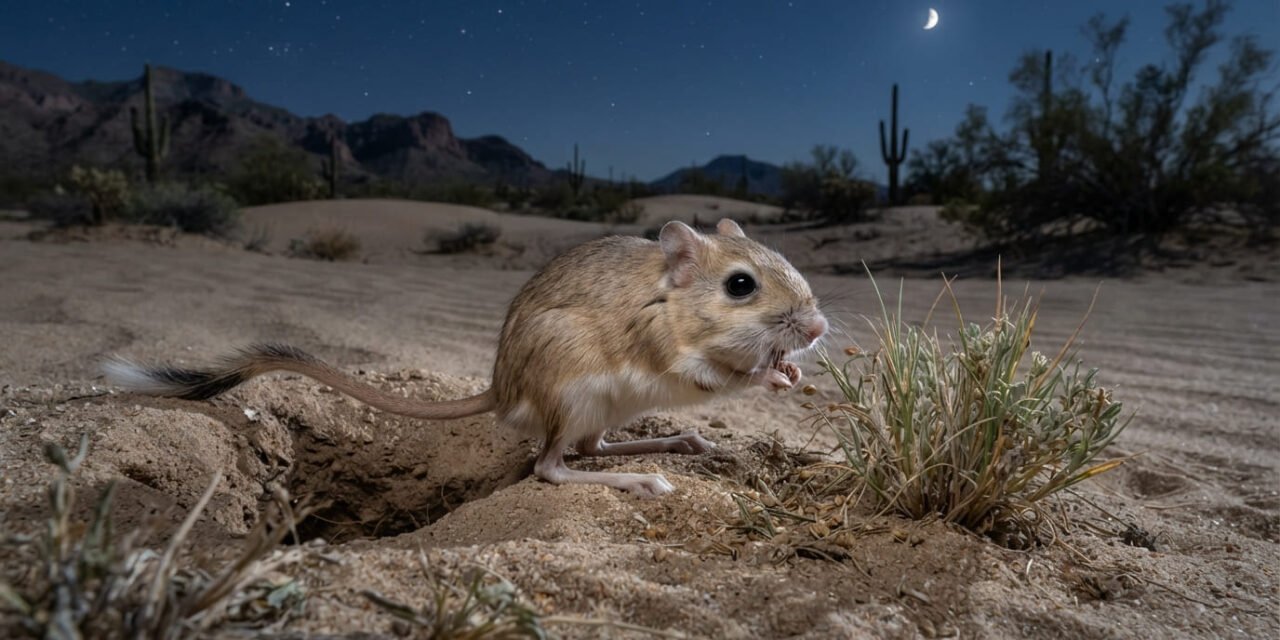
If you spent a summer day in the California desert without a bottle of water, you would be in trouble within hours. The heat is relentless. The air is so dry that it pulls moisture right out of your skin. Yet, a small creature called the Kangaroo Rat lives in these dunes every day and never takes a single drink. It doesn’t find puddles. It doesn’t lick dew off plants. It spends its entire life, which can last several years, without swallowing a drop of liquid.
This animal is a master of efficiency. It has figured out how to survive on a “budget” of moisture that would kill any other mammal. The way it manages this involves a mix of internal recycling and smart behavior.
Making Water from Dry Seeds
You probably think of water as something you have to find and swallow. For the Kangaroo Rat, water is something it makes inside its own body. Its diet consists almost entirely of dry seeds. These seeds are as dry as crackers. There is no juice or liquid in them at all.
When the rat eats a seed, its body breaks that food down to create energy. A natural byproduct of this digestion process is water. Every living thing does this. When you eat a snack, your body creates a tiny amount of water as it burns the fuel. The difference is that humans lose that “new” water almost immediately through sweat or breathing. The Kangaroo Rat is different. It is so good at saving every drop that the water it makes from its food is enough to keep it alive.
Super-Powered Kidneys
To stay alive on such a small amount of water, you cannot afford to waste any. This is where the Kangaroo Rat’s kidneys come in. Your kidneys need a lot of water to flush waste out of your body. If you don’t drink enough, your kidneys can’t do their job, and you get sick.
The Kangaroo Rat has the most powerful kidneys of any mammal. They are about five times more efficient than yours. When you go to the bathroom, your waste is mostly water. When a Kangaroo Rat goes, its waste is a thick, pasty substance. Its kidneys are so strong that they pull almost every molecule of water back into the blood before the waste leaves the body. It keeps the water and gets rid of the trash.
A Nose That Recycles Breath
You lose water every time you breathe out. You can see this on a cold morning when your breath looks like a cloud of steam. That steam is actually water leaving your body. In the desert, that is a dangerous loss.
The Kangaroo Rat has a special cooling system inside its nose. Its nasal passages are narrow and stay cool. When the rat breathes out warm air from its lungs, that air hits the cool walls of its nose. The moisture in the breath turns back into liquid water right there on the inside of its nostrils. The rat then reabsorbs that water into its body. It is essentially catching its own breath and drinking it before it can escape into the air.
Sleeping Through the Heat
The Kangaroo Rat never tries to fight the sun. It is strictly nocturnal, meaning it only comes out at night when the air is cooler. During the day, it stays in a burrow deep underground.
The dirt acts as a thick layer of insulation. While the surface of the sand might be 130 degrees, the burrow stays at a comfortable 75 degrees. The rat also plugs the entrance with dirt. This keeps the moisture from its own breath trapped inside the room. By making its bedroom slightly humid, the rat stops its skin from drying out. It spends the hot day sleeping in a cool, damp basement.
No Sweat Allowed
Humans cool down by sweating. This works because the water on your skin evaporates and takes heat with it. But sweating uses up a lot of water. A Kangaroo Rat cannot afford this. It doesn’t have sweat glands.
If the rat gets too hot, it can’t turn on a built-in air conditioner. This is why its burrow is so important. If it stayed on the surface during the day, it would overheat and die because it has no way to cool down using water. Its survival depends on staying hidden until the stars come out.
Spring-Loaded Legs
The name “Kangaroo Rat” comes from the way it moves. It has very long back legs and short front arms. It hops just like a kangaroo. This isn’t just for show. Hopping is a very efficient way to travel long distances in the sand.
Its legs have strong tendons that work like rubber bands. When the rat lands, the tendons stretch and store energy. When it jumps again, that energy is released, pushing the rat forward. This means the rat uses very little muscle power to get around. Using less muscle means the body stays cooler and doesn’t need as much energy. When the body stays cool and calm, it saves even more water.
Escape Artists
These hopping legs also help the rat stay alive when predators are nearby. Owls and rattlesnakes hunt Kangaroo Rats at night. Because the rat can jump several feet into the air from a still position, it is very hard to catch. It can even change direction while it is in mid-air.
If the rat gets away quickly, it doesn’t get stressed out. Stress makes an animal’s heart beat faster and makes them breathe harder. As we know, breathing harder means losing water. By being a great jumper, the rat keeps its escapes short and its water levels high.
The Seed Cache
The rat is also smart about how it stores its food. It carries seeds back to its burrow in pouches in its cheeks. It doesn’t eat them all at once. It buries them in the walls of its moist burrow.
The dry seeds act like little sponges. They soak up the tiny bit of moisture in the burrow’s air. By the time the rat eats the seed, the seed actually has more water in it than when it was found on the surface. It is a tiny gain, but for an animal that never drinks, every bit counts.
Lessons from the Rat
Scientists study the Kangaroo Rat to understand how to manage water better. The way its kidneys filter liquid is a model for how we might one day build better water-cleaning systems for people living in dry areas.
This bird-sized mammal proves that you don’t need a lush forest or a big lake to thrive. You just need to be better at saving what you have than everyone else. While other desert animals have to travel miles to find a water hole—putting themselves at risk of being eaten—the Kangaroo Rat stays safe in its home, eating dry seeds and making its own luck.
Final Thoughts
The Kangaroo Rat is a specialist. It has traded the ability to live in a forest for the ability to own the desert. It is a reminder that nature provides everything an animal needs, even if it doesn’t look like much to us.
To the rat, a dry seed is a meal and a drink. A pile of hot sand is a safe, cool home. It survives because it doesn’t waste anything. In a world that is getting hotter and drier, the Kangaroo Rat is the ultimate survivor. It doesn’t need the rain to fall; it just needs the sun to go down so it can start its day.