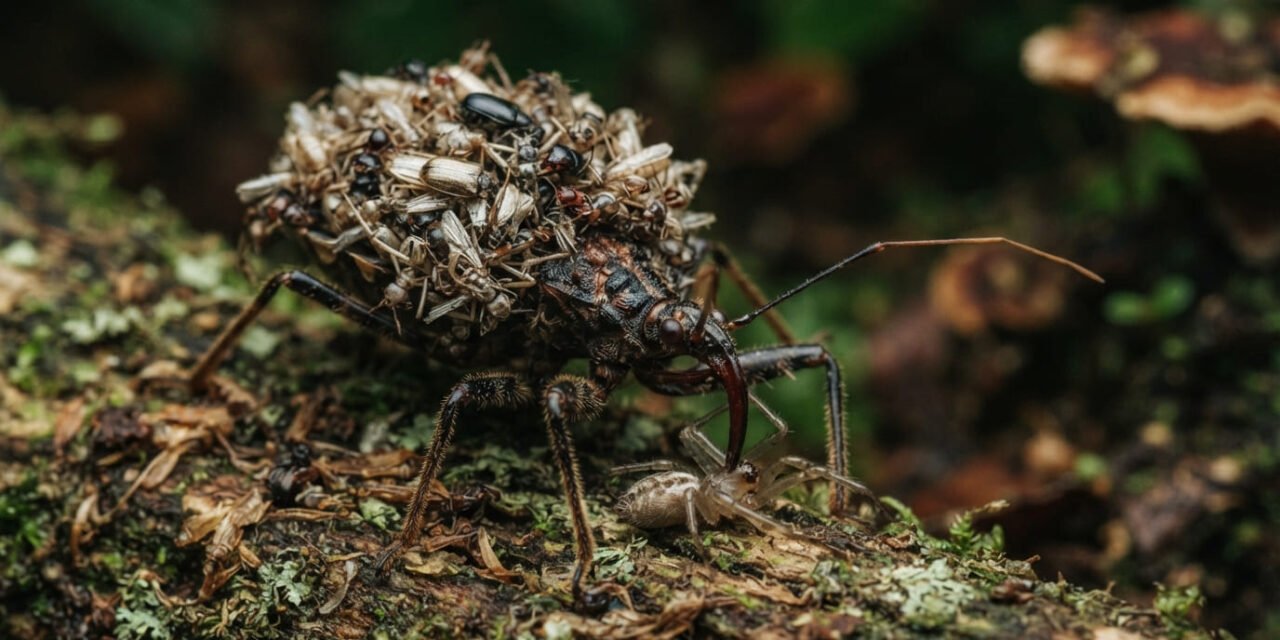
You might think you have seen every strange survival strategy in the animal kingdom. You know about chameleons changing color and octopuses mimicking rocks. But there is a predator in the insect world that takes a much darker path to stay safe. Meet the assassin bug.
Specifically, look at a species called Acanthaspis petax. This insect does not just hide in the shadows. It kills its prey, eats the insides, and then glues the empty carcasses to its own back.
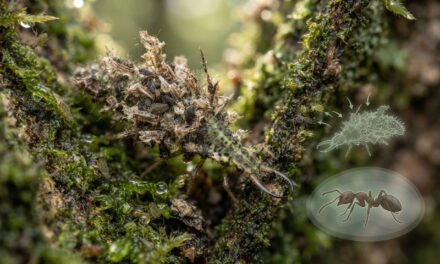
If you see one in the wild, you probably won’t recognize it as a bug. It looks like a moving pile of dust and dead ants. This is not a random accident. It is a calculated engineering feat. This bug builds a physical shield made of the bones and shells of its victims. It uses this backpack to confuse predators and protect its soft body from attack.
The Tools of the Trade
The assassin bug belongs to the Reduviidae family. There are thousands of species, but the ones that wear corpses are some of the most specialized. To build a suit of armor out of dead bodies, you first have to be an efficient killer. The assassin bug has a very specific tool for this: the rostrum.
The rostrum is a sharp, needle-like beak that stays tucked under the bug’s head until it is time to strike. When the bug finds a victim, usually an ant, it stabs the rostrum into a soft joint in the ant’s armor. It does not just bite. It injects a powerful cocktail of enzymes. These chemicals do two things. First, they paralyze the prey instantly. Second, they turn the inside of the ant into a liquid soup.
Once the enzymes have done their work, the assassin bug uses its rostrum like a straw. It drinks the liquefied organs and muscles. This leaves behind a perfectly intact exoskeleton. Most predators would just drop the empty shell and move on. The assassin bug keeps it.
Building the Backpack
Constructing the shield is a careful process. The bug has specialized hairs on its back called trichomes. These hairs produce a sticky, wax-like secretion. You can think of it as a natural biological glue.
After the bug finishes its meal, it uses its legs to lift the empty ant shell. It carefully positions the shell on its back and presses it into the sticky wax. It does not just throw the bodies on in a heap. It stacks them. Some assassin bugs carry as many as twenty dead ants at one time.
The resulting pile is often larger than the bug itself. It is a tall, irregular tower of hollowed-out corpses. This creates a strange visual profile. If you are a predator looking for the silhouette of a juicy bug, you won’t find it here. You will only see a messy clump of debris.
Defeating the Jumping Spider
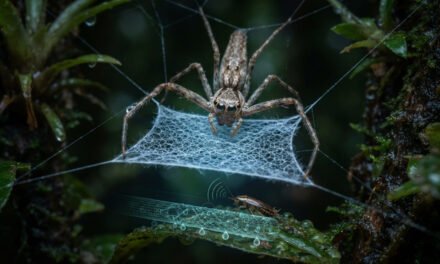
The primary enemy of the assassin bug is the jumping spider. Jumping spiders are highly visual hunters. They have incredible eyesight and can recognize the specific shapes of their prey from a distance. They look for things that look like bugs.
In 2007, scientists conducted a study to see exactly how effective these backpacks really are. They used jumping spiders as the predators. They presented the spiders with two types of assassin bugs: those with their ant backpacks and those that had been “stripped” of their armor.
The results were clear. The spiders attacked the naked assassin bugs ten times more often than the ones wearing the corpses. The spiders simply did not recognize the bugs with backpacks as food. To the spider, the pile of ants looked like a piece of the environment or a group of ants that were too much trouble to hunt.
Even when the spiders did decide to attack, the backpack provided a physical advantage. If a spider lunges at the bug, it often grabs the pile of corpses instead of the bug’s body. The bug can then shed part of its backpack and escape while the spider is left holding a pile of empty shells. It is a sacrificial defense system that saves the bug’s life.
Chemical Camouflage
The benefits of the backpack go beyond just visual confusion. Ants communicate through chemicals. They use pheromones to identify members of their colony and to mark trails. When an assassin bug wears a pile of dead ants, it is also wearing their scent.
Ants are aggressive. Most small predators avoid ant colonies because ants swarm and bite. By smelling like a pile of ants, the assassin bug creates a “keep away” sign for other insects. This is an olfactory mask. It hides the bug’s own scent and replaces it with the smell of a dangerous colony.
This is particularly useful when the assassin bug is hunting more ants. It can get close to a trail without being detected as a threat. The other ants don’t realize a predator is among them until it is too late. The bug uses the bodies of the dead to trick the living.
The Cost of Carrying the Dead
Wearing a massive pile of bones is not free. There are physical costs to this strategy. A large backpack adds weight. It makes the bug slower and less agile. It also makes it harder for the bug to squeeze into tight crevices to hide.
The assassin bug has to balance the need for protection with the need for mobility. If the pile gets too big, the bug might struggle to move efficiently. You will often see them adjusting their load or shedding old shells to make room for new ones.
The glue itself also requires energy to produce. The bug has to consume enough nutrients to fuel the glands that make the sticky wax. Every part of this defense is an investment. The bug spends its resources on armor because the threat of being eaten is so high.
Variations Across the Species
While Acanthaspis petax is the most famous corpse-wearer, other species use different materials. Some use bits of leaves, twigs, or soil. Others use the dust and lint they find in human houses. The “masked hunter” is a species of assassin bug often found in homes. As a nymph, it covers itself in dust and fibers. It looks like a moving lint ball.
This shows that the behavior is about breaking the visual outline of the body. Whether the material is dead ants or carpet dust, the goal is the same: do not look like a bug. The species that choose ants are simply using the most abundant and effective material in their specific environment.
The Life Cycle of the Assassin
The corpse-carrying behavior is most common in the nymph stage of the bug’s life. Nymphs are younger and more vulnerable than adults. They lack the hard wings and the full size of a mature bug. For them, the backpack is a vital bridge to adulthood.
As the bug grows, it molts. It sheds its old skin, and with it, the entire backpack. The bug then has to start over. It is a fresh canvas. It must go out, find a new victim, and begin building a new shield from scratch. This process happens several times before the bug reaches its final adult form.
Some adults continue to wear debris, but many rely more on their size and improved flying ability to escape predators. The backpack is primarily a tool for the youth of the species to survive the most dangerous years of their lives.
Why You Should Care
The assassin bug is a master of recycling and resource management. It takes the waste products of its hunting—the empty shells—and turns them into a life-saving technology. It shows you that in nature, nothing is wasted.
You should care about this because it demonstrates a level of complexity in insect behavior that people often overlook. This is not a “simple” creature. It uses chemistry to kill, physics to build, and psychology to trick its enemies.
Engineers study the assassin bug to understand how to build lightweight, modular armor. If we can learn how the bug distributes the weight of its backpack or how its glue works in different temperatures, we can apply those facts to our own materials.
Nature has already solved the problem of staying safe in a world of high-speed predators. The solution was not to be stronger or faster. The solution was to hide behind the dead. The assassin bug is a reminder that the most effective way to win a fight is to make sure your opponent never knows you are there. It is a brutal, efficient, and brilliant strategy that has worked for millions of years.