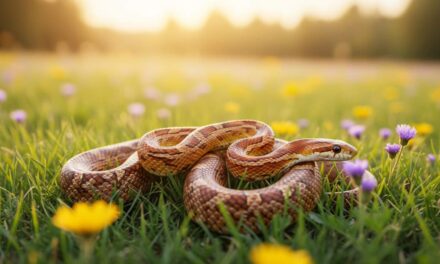
Imagine you are taking a quiet walk through a warm, sandy pine forest or a sunny, grassy field. The birds are singing, the air is fresh, and you are enjoying the peaceful day. As you step near a clump of dry grass, you hear a loud, sharp hiss. You freeze and look down. Standing just a couple of feet away is a thick-bodied snake.
It has flared the skin around its neck, making its head look wide, flat, and triangular. It looks exactly like a miniature cobra. It raises its upper body off the ground, puffs up its chest, and lets out another deep, threatening hiss that sounds like air leaking from a tire. If you take a step closer, the snake lunges forward in a sudden, violent strike, slamming its head toward your boot.
Most people would take a fast step backward, their heart hammering against their ribs, convinced they just stumbled upon a deadly venomous reptile. If you did, you would be the latest audience member to get completely fooled by one of the greatest actors in the animal kingdom.
The terrifying cobra you just saw is not dangerous at all. It is the hognose snake, a completely harmless, mild-tempered creature that lives in the grasslands and sandy woodlands of North America. It has no deadly venom, it does not have fangs for biting humans, and it is actually quite small, usually growing only about two feet long.
Yet, when faced with danger, this little snake puts on a multi-stage theatrical performance that would make Shakespeare jealous. It is a master of psychological warfare, using a combination of scary bluffs, fake deaths, and a hilarious commitment to its role to survive in a world full of larger predators.
Act One: The Cobra Impostor
The hognose snake’s survival strategy is divided into distinct acts, and it always starts with the scary bluff. The snake prefers to avoid a fight if it can, so its first goal is to convince you that it is too dangerous to touch.
When a hognose feels threatened by a human, a dog, or a hungry hawk, it immediately begins to reshape its body. It has long, flexible ribs near its neck that it can push outward. This flattens the skin around its head, creating a hood that looks remarkably like a cobra.
To make itself look bigger and more intimidating, the snake inhales deeply, puffing up its entire body with air. It then releases this air in a series of incredibly loud, raspy hisses. It wants to sound like a dangerous, high-pressure pressure cooker ready to blow.
If the flaring and hissing do not work, the hognose brings out its secret weapon: the mock strike.
The snake will coil up, pull its head back, and lunge forward toward the threat with incredible speed. It looks like a classic, venomous strike. But if you watch this strike in slow motion, you will notice a hilarious detail. The hognose snake rarely opens its mouth when it strikes.
It is essentially headbutting you with its nose closed. It is a completely harmless bluff. The snake has no desire to actually bite you, because its mouth is tiny and it does not have the kind of teeth designed for fighting. It simply wants to scare you enough to make you turn around and walk away.
Act Two: The Grand Tragedy
If you are a persistent predator, or a curious human who knows the snake’s secret, you might not run away from the cobra act. You might stand your ground, or even gently nudge the snake with a stick.
When the hognose realizes that its scary bluff has failed, it does not try to fight harder. Instead, it instantly switches to a completely different script. It decides that if it cannot look dangerous, it must look like the most pathetic, unappetizing thing in the forest.
It is time for the death scene.
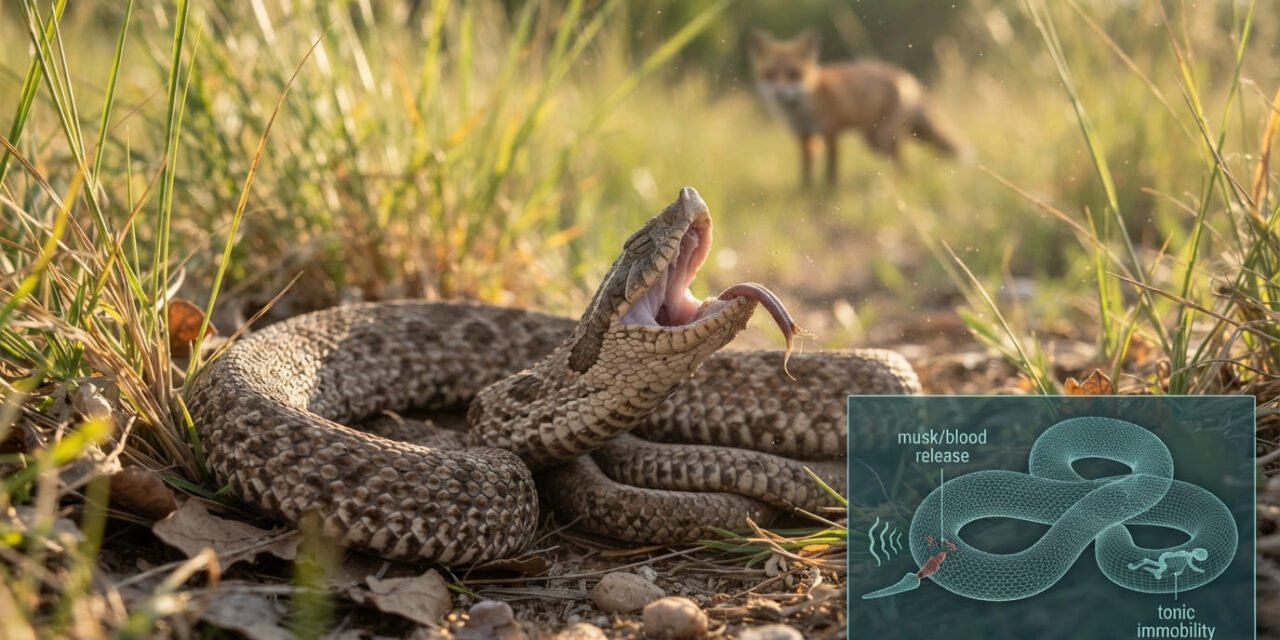
The transition is sudden and dramatic. The snake stops hissing and flaring. Instead, it begins to writhe back and forth on the ground as if it is in extreme physical agony. It twists its body into tight, awkward loops, opens its mouth incredibly wide, and lets its long, fork-tipped tongue hang limply out of its jaws.
To make the scene even more realistic, the snake begins to secrete a foul-smelling liquid from its rear glands. This musk has a sharp, rotten odor that smells like decaying meat. The snake will even roll its body in this smelly liquid, coating its scales in the scent of decay. Sometimes, it will even rupture tiny blood vessels in its mouth, causing a few drops of real blood to pool around its lips.
After a few seconds of this dramatic writhing, the snake rolls completely onto its back, lets its body go totally limp, and stops moving. Its mouth remains wide open, its tongue rests in the dirt, and it appears to be stone-dead.
To any passing predator, the message is clear: this is not a fresh, healthy meal. It is a rotten, smelly carcass that has been dead for days. Most predators, like hawks, foxes, and coyotes, are highly selective about what they eat. They do not want to risk getting sick by eating rotten meat, so they will sniff the smelly, limp snake, lose interest, and walk away in search of a fresher meal.
The Hilarious Commitment to the Role
While playing dead is a common defense mechanism in the animal world, the hognose snake takes its commitment to the stage to an almost absurd level. This commitment leads to a famous biological glitch that has amused researchers and nature lovers for decades.
If you find a hognose snake that is playing dead, it will lie completely flat on its back with its belly facing the sky. If you pick the snake up, it will hang in your hands like a piece of wet rope.
But if you place the snake back down on the ground on its belly, it will instantly roll right back over onto its back.
If you flip it over again, it will quickly twist its body and land back on its spine, pointing its belly to the sky once more. It is as if the snake is shouting, “No, you do not understand! I am definitely, absolutely dead, and dead snakes always lie on their backs!”
This rigid instinct is hilarious to watch, but it shows how deeply hardwired the behavior is in the snake’s brain. The snake is operating on pure survival software. To the hognose, the back-down posture is the only correct way to be dead. It cannot help but correct its position because its biological programming tells it that a dead snake sitting upright on its belly is not convincing.
The Toad Hunter’s Tool
When the hognose snake is not busy putting on theatrical plays, it is a highly specialized hunter with some fascinating physical tools. It gets its name from its unique, upturned snout, which looks like the nose of a small pig.
This snout is made of thick, hardened scales and is backed by strong facial muscles. The hognose uses this spade-like nose to dig through loose sand, dry leaves, and soil.
It is searching for its absolute favorite food: toads.
Toads are notoriously difficult for most animals to eat. When a toad is threatened, it puffs its body up with air like a balloon, making itself too wide for a predator to swallow. To make things worse, toads secrete a bitter, toxic chemical from the glands behind their eyes that can make other animals extremely sick or even kill them.
The hognose snake has evolved to overcome both of these defenses.
First, the hognose is completely immune to the toxic chemicals produced by toads. Its digestive system can easily neutralize the poison, allowing it to enjoy a meal that would be lethal to other snakes.
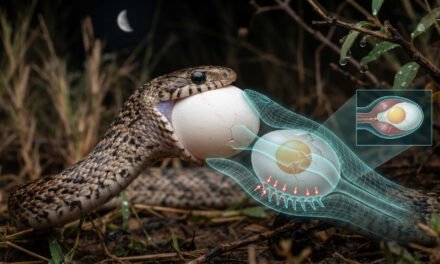
Second, the hognose has a pair of enlarged, specialized teeth in the very back of its mouth. These are not hollow fangs that inject liquid venom like a viper. Instead, they are sharp, curved blades.
When the hognose grabs a puffed-up toad, it uses these rear teeth to puncture the toad’s skin, deflating the animal like a popped balloon. Once the air is let out, the toad becomes narrow and easy for the snake to swallow whole. The upturned nose and the rear teeth are a perfect, specialized toolkit designed for a very specific lifestyle.
A Solitary Life of Peace
Despite their scary bluffs and dramatic death scenes, hognose snakes are incredibly gentle. They are slow-moving, solitary creatures that spend their days basking in the sun, digging in the sandy dirt, and avoiding confrontation.
They are popular among reptile lovers because they are incredibly reluctant to bite. Even when humans handle them in the wild, the snakes will almost always prefer to hiss, mock-strike, or play dead rather than open their mouths to bite. They are peaceful neighbors that play a vital role in keeping toad and insect populations balanced in their local environments.
The next time you are walking through a grassy field and hear a loud, threatening hiss, do not panic. Look closely at the ground. You might just be looking at a little hognose snake, flaring its neck and preparing to launch into the first act of its famous show.
It is a wonderful reminder that in the wild, you do not always need to be the strongest, fastest, or most venomous creature to survive. Sometimes, all you need is a little creativity, a great costume, and an absolute commitment to the drama of life.